Quick answer
Plan 1 pie portion per person for a meal with other food, 1.5 if pies are the whole meal, 1 for a pies-only snack and about 0.6 for a snack beside other food, then add 10%. A personal pie is one portion; a whole pie gives 4 portions at a meal or 6 as a snack. For more than 6 guests, let whole pies cover about 70%.
Party pie calculator
How many personal and whole pies to order, with the working shown.
Order this
Why this number
- 20 guests at 0.6 portions each for a snack alongside other food, plus a 10% buffer, gives 14 portions.
- 20% of those go to sweet pies: 3 sweet portions and 11 savoury portions.
- A whole pie cuts into 6 snack-size slices, so 1 whole pie cover 6 portions (about 70% of the savoury share).
- 5 personal pies cover the rest. They suit late arrivals, takeaways and anyone who prefers their own pie.
- With only 3 sweet portions, individual sweet pies or tarts are easier than a whole pie.
The rules of thumb behind the numbers
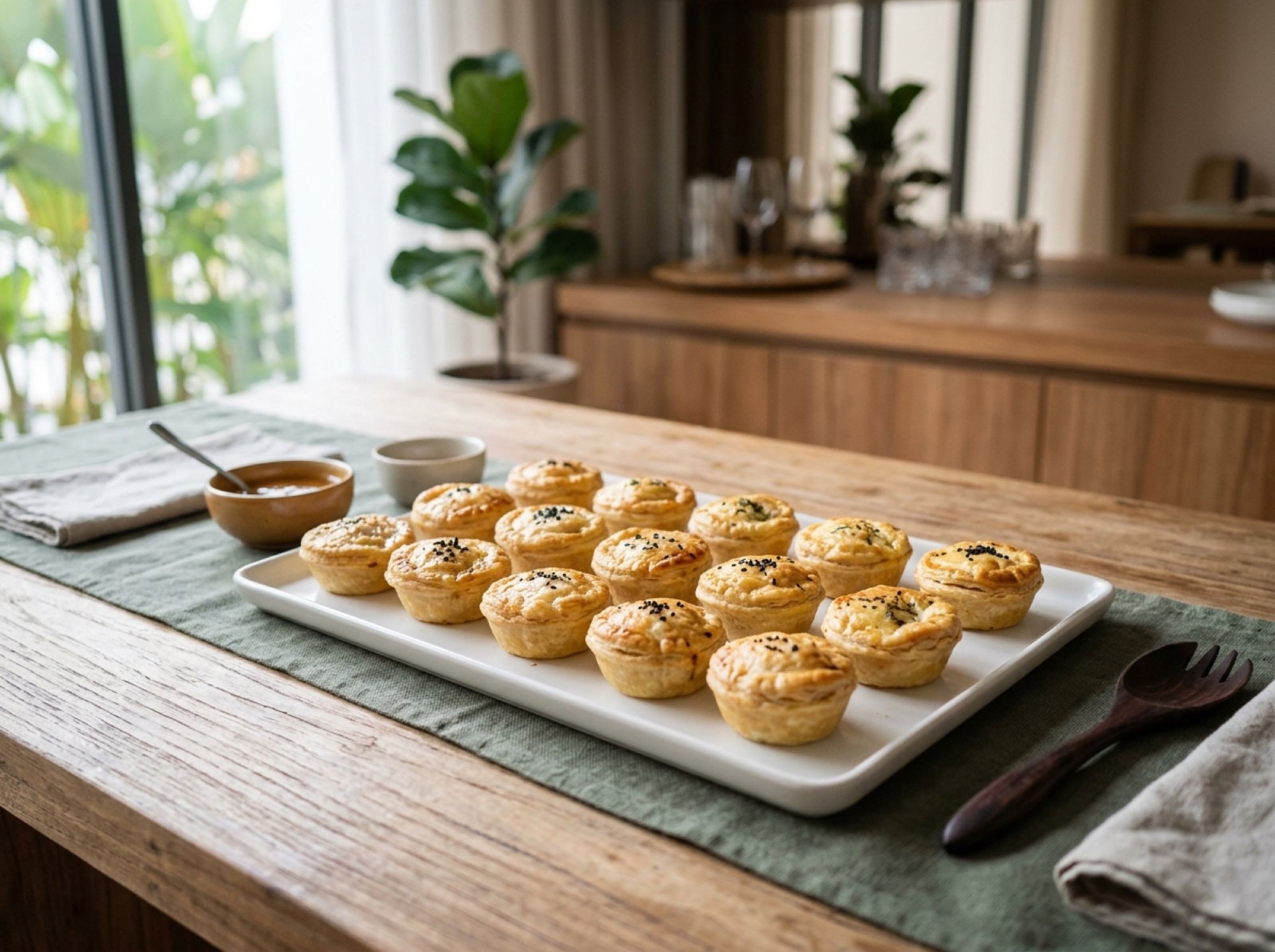
- One personal pie is one portion. Personal pies are sized to feed one person.
- A whole pie feeds 4 to 6. We cut it into 4 slices when pies are the meal and 6 when they are a snack.
- Portions per guest: 1.5 for a meal of pies alone, 1 for a meal with other dishes, 1 for a pies-only snack, and 0.6 for a snack alongside other food.
- Add 10% for second helpings and the guest who arrives with a friend.
- Above 6 guests, whole pies cover about 70% of the savoury share (better value, less packaging) and personal pies cover the rest.
- Sweet pies are cut into 8 slices, because a dessert slice is smaller than a savoury one. Four or fewer sweet portions means buying individual sweet pies instead.
How does the calculator work?
The calculator multiplies your guests by a portion rate, adds a buffer, splits the result between savoury and sweet, and then decides how many whole and personal pies cover the savoury share. Every rule is listed under the tool, so you can check the maths or adjust it by hand.
The starting point is the size of the pies themselves. Singapore bakeries usually sell a personal pie that feeds one and a whole pie that feeds 4 to 6. Don Pie’s printed menu, for example, labels them “Feeds 1” and “Feeds 4-6”, terms the Don Pie glossary defines alongside personal and whole. We treat a whole savoury pie as 4 slices at a meal and 6 as a snack.
Why is the rate different for a snack and a meal?
People eat more when pies are the meal than when they are a tea-time bite. And they eat less when there is other food. The four rates reflect that:
| Situation | Portions per person |
|---|---|
| Meal, pies are the main food | 1.5 |
| Meal, with other dishes | 1 |
| Snack, pies only | 1 |
| Snack, beside other food | 0.6 |
These are our planning rules of thumb, not a bakery’s rule. If your crowd is hungrier (a football team, say), move up a row.
Why add 10%?
The 10% buffer covers second helpings, the guest who brings a friend, and the pie that gets dropped. Leftover pies keep in the fridge for a few days or freeze well, so a small surplus costs little. Running out at a party costs more.
Why split between whole and personal pies?
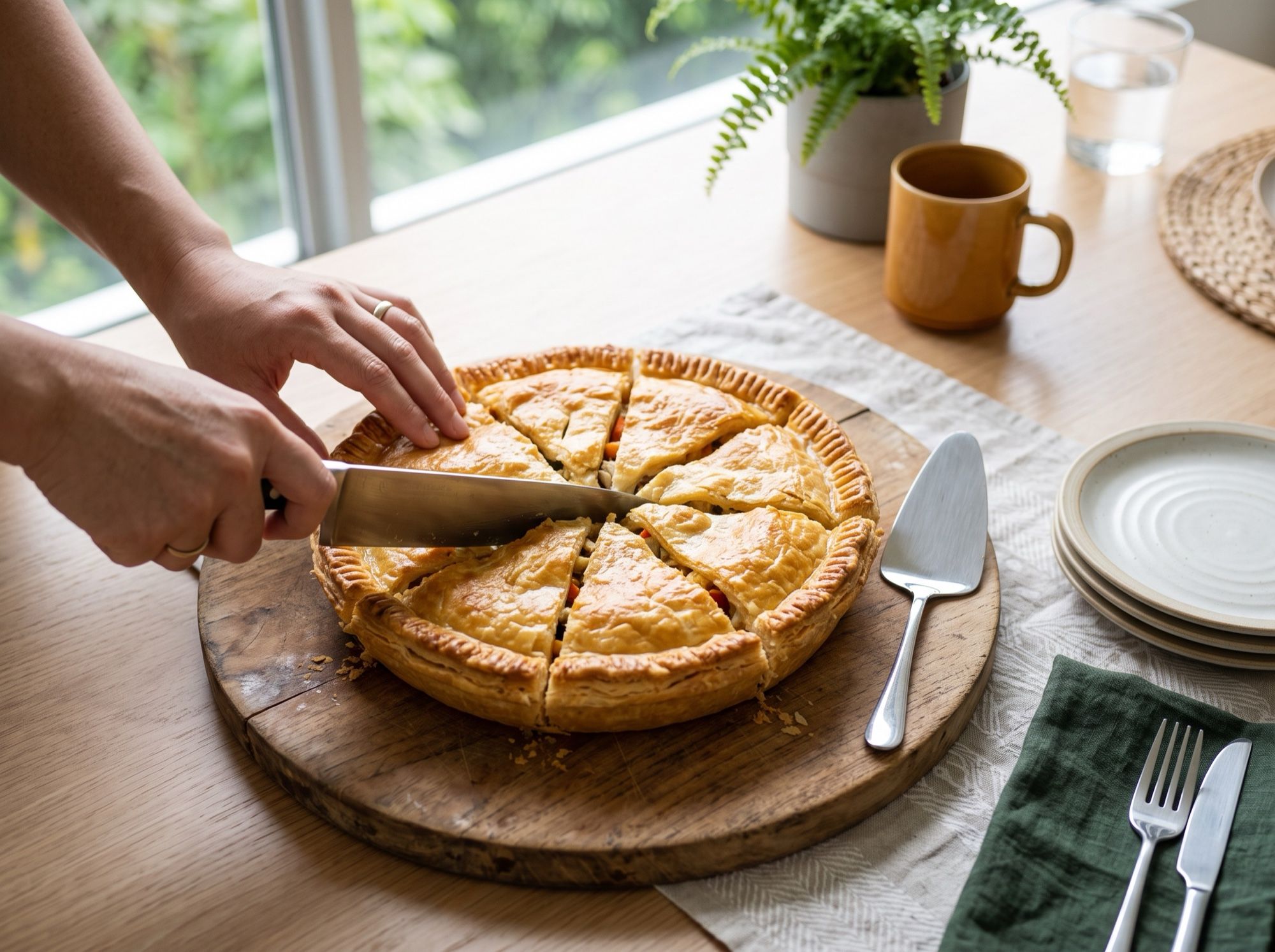
Above six guests, the calculator lets whole pies cover about 70% of the savoury portions and personal pies the rest:
- Whole pies are cheaper per portion and look generous on a table.
- Personal pies serve late arrivals, children and anyone who wants their own, and they are easy to send home.
For six guests or fewer, it suggests personal pies only, because cutting a whole pie for a small group creates awkward leftovers.
Worked examples
A 25-person office tea break, other food served. 25 x 0.6 = 15, plus 10% = 17 portions (rounded up). Mostly savoury: 3 sweet portions and 14 savoury. Two whole pies cut into 6 cover 12 portions, 2 personal pies cover the rest, and 3 individual sweet pies finish it off. In an office, many planners would simply order 14 personal savoury pies instead: see office pantry pies.
A family dinner for 12, pies are the meal. 12 x 1.5 = 18, plus 10% = 20 portions. All savoury, cut into 4 meal-size slices: 4 whole pies (16 portions) plus 4 personal pies.
Next: when to order
Quantities settled? The pie order planner turns your event date into an order-by date, a collection or delivery time and a reheating time. For which types to choose, try the chooser on the best types of pies. All five tools are on the pie buying tools page.
Questions buyers ask
How many whole pies do I need for 10 people?
For 10 people at a meal with other dishes, plan 11 portions. That is two whole pies cut into 4 slices each, plus 3 personal pies, which is what the calculator returns for an all-savoury order. As a snack beside other food, about 7 portions: one whole pie cut into 6 and one personal pie.
How do I count children?
Count two young children as one adult. Older children and teenagers eat like adults, sometimes more.
How many sweet pies should I order?
One whole sweet pie per 8 dessert eaters, since dessert slices are cut thinner. If only three or four people want dessert, buy individual sweet pies instead.
Last updated: October 2026 (published , facts re-checked ). Prices, hours and terms change, so confirm with the bakery before you order.